Dan Park
Digital Experience Leader
Design × Data × Customer Confidence
These responses reflect how I approach digital experience, e-commerce, and team leadership in high-consideration, design-led businesses. My thinking is grounded in building customer confidence, balancing brand and performance, and making clear tradeoffs that drive durable impact - not just short-term wins.
Rather than theoretical answers, I’ve focused on the frameworks, principles, and decisions I’ve relied on in practice, especially in environments where trust, clarity, and experience quality directly influence growth. Each response is meant to spark discussion and show how I reason through complex problems with both the customer and the business in mind.
1.Prioritization
“You inherit a backlog of 60 UX/e-commerce improvement ideas and a small team for the next quarter. How would you prioritize what to do next? In your answer, include your prioritization framework, the inputs you’d require, and how you would communicate tradeoffs to executives and teams.”
-
I start by aligning on a small set of priorities, such as:
Improving conversion through better UX and storytelling
Reducing customer friction for high-consideration purchases
Increasing self-service to lower support needs
This ensures the team is focused on impact, not activity.
-
Each idea is evaluated against a simple set of criteria:
Customer impact: Does it reduce friction or uncertainty?
Business impact: Will it influence conversion, engagement, or support?
Confidence: Is this supported by data or customer insight?
Effort & dependencies: What’s required from design, tech, and partners?
This quickly surfaces high-value, achievable work
-
(An example framework used in the past)
For top initiatives, I pressure-test decisions using FBCOC:Financial: Drives growth without discounting
Brand: Elevates a premium, design-led experience
Culture: Enables ownership, clarity, and learning
Operations: Reduces friction and improves scalability
Community (Customer): Builds confidence and trust
This ensures we’re making balanced, sustainable choices.
-
I prioritize a mix of quick wins and strategic improvements, with clear hypotheses and success metrics so we can test, learn, and iterate throughout the quarter. But always thinking of long-term actions as well.
-
Executives: What we’re doing, what we’re deferring, and why
Teams: Clear goals, ownership, and success metrics
When inheriting a large UX and e-commerce backlog, my first goal is to create focus around what will most meaningfully improve the customer experience and business outcomes in the next quarter.

2.Customer-Centred Ideas
“How would you redesign Cozey’s sofa product detail page to increase emotional resonance and improve performance metrics? In your answer, describe what you’d add or remove, which customer anxieties you’d aim to reduce, and how you would validate that the redesign is working.”
When redesigning a sofa PDP, I’d start by acknowledging that this is a high-consideration purchase. Customers aren’t just choosing a product - they’re trying to reduce uncertainty around fit, comfort, style, quality, and long-term confidence. My approach is to balance emotional inspiration with clear, practical signals that help customers feel informed, supported, and confident throughout the decision-making process.
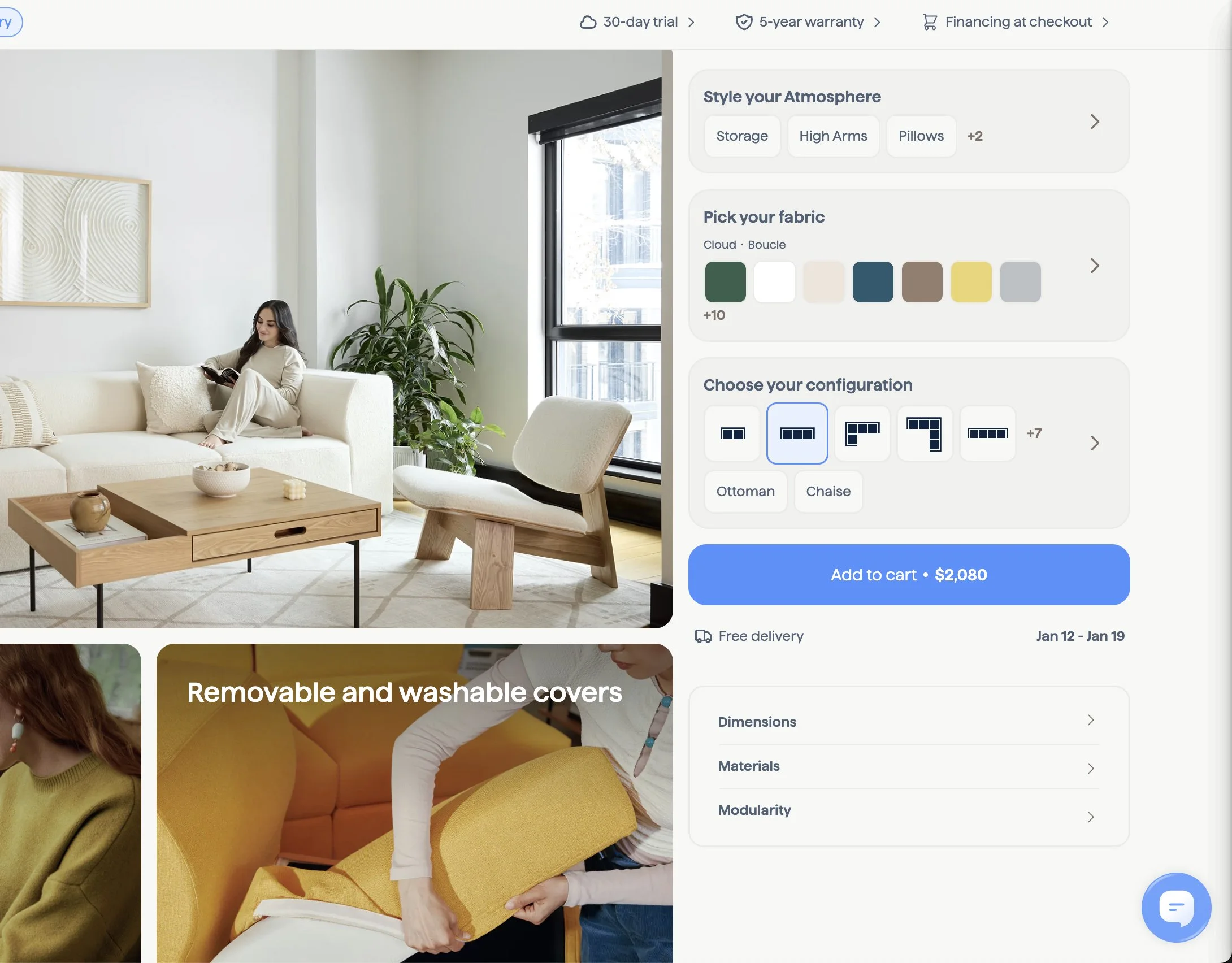
Core decision attributes - dimensions, materials, assembly, delivery, and care - would be consolidated into a structured panel (such as a right rail or persistent module). This reduces cognitive load and allows the main content area to focus on what inspires: high-quality lifestyle imagery and the 3D modular sofa experience.
Simplify and Elevate the PDP layout
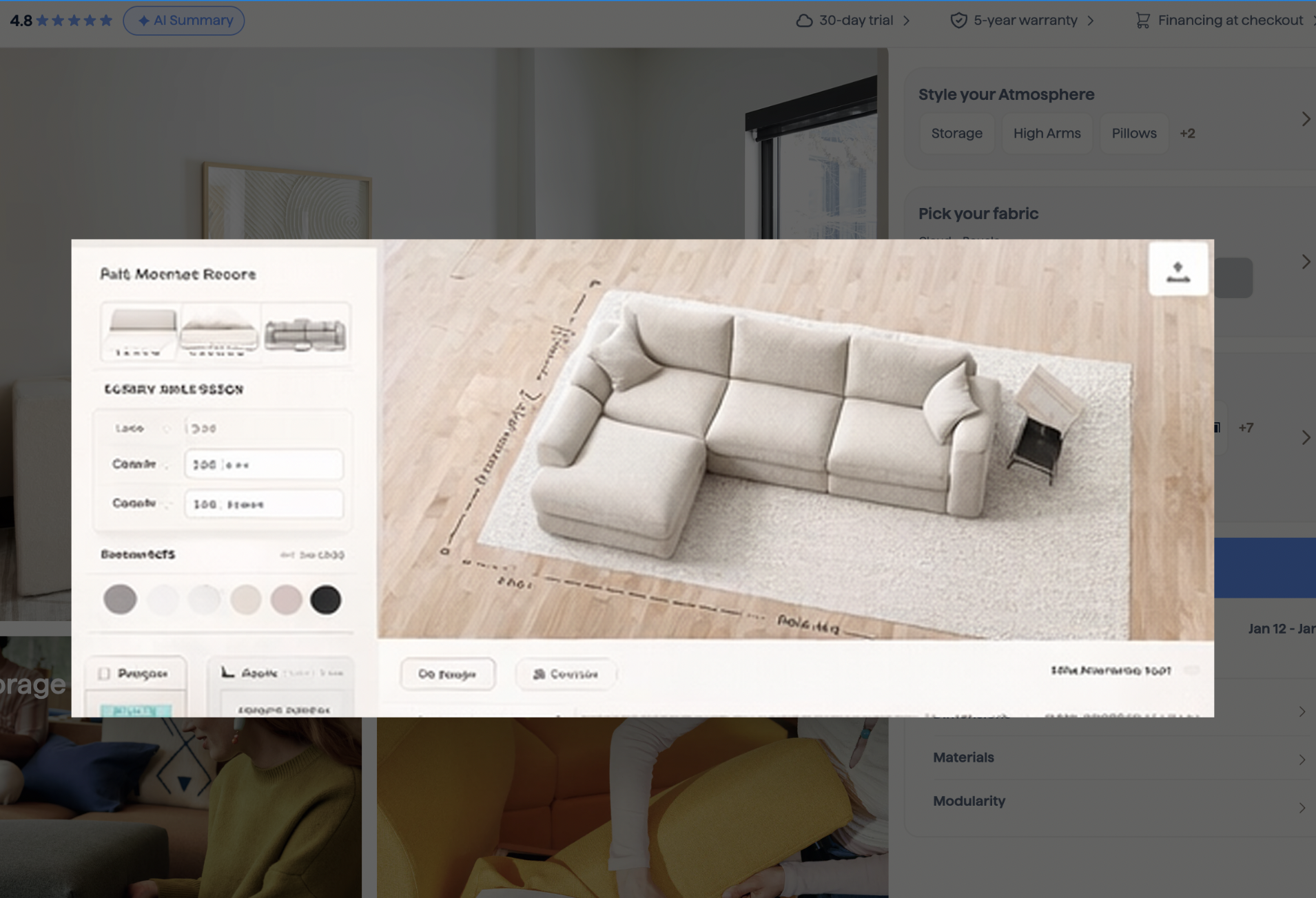
To address one of the biggest anxieties in furniture shopping: scale and fit. Starting with a simple bird’s-eye view, customers could input room dimensions and explore how different modular configurations fit their space. Over time, this could evolve into a broader planning tool that allows customers to visualize multiple Cozey products together.
Interactive Room Visualizer
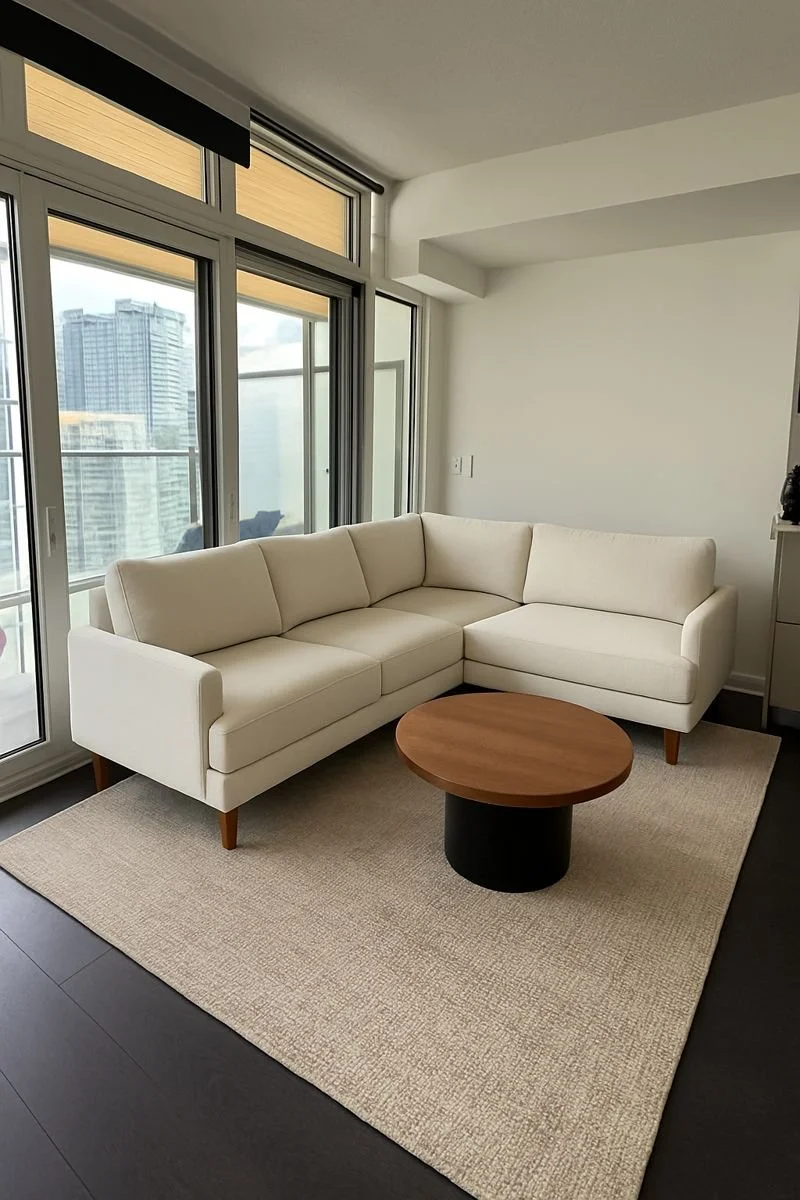
Enabling customers to upload a photo of their room and place a selected sofa into it. Seeing the product in their actual environment helps reduce uncertainty and builds emotional connection.
AI-assisted Space Visualization
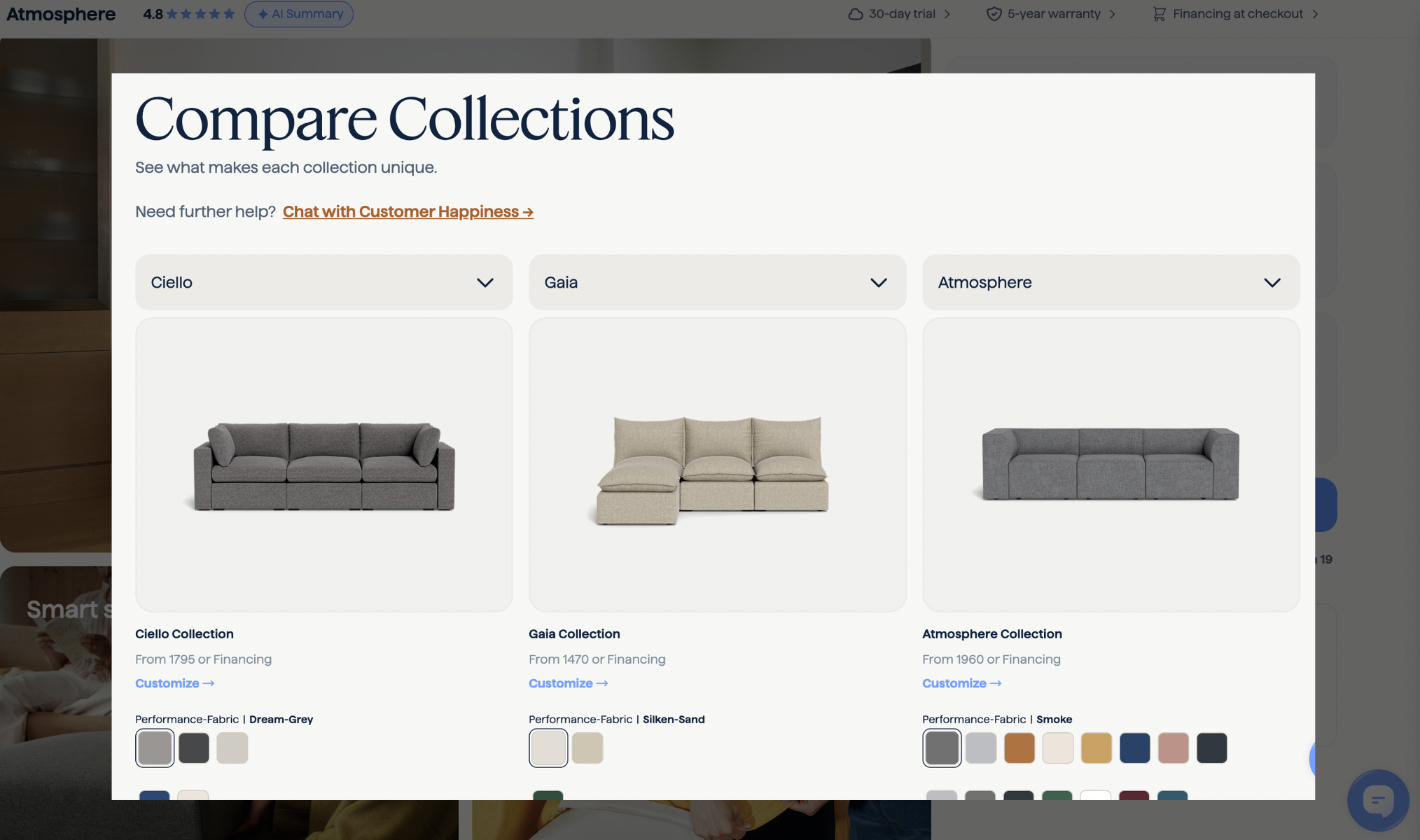
Link to the compare module that exists so customers can easily compare configurations or sofas across size, firmness, modularity, and colour - supporting confident decisions without excessive navigation.
Product Comparison Module
To validate success, I’d track PDP conversion, add to cart rate, time to decision, and engagement with key modules, alongside downstream signals like reduced returns, fewer fit-related support contacts, and improved post-purchase satisfaction.
3.Leadership
“How would you structure and lead a combined e-commerce, UX/UI, and analytics team to move quickly while staying customer-obsessed? In your answer, cover how you’d set the team up for speed and quality, what rituals you’d introduce, how decisions would get made, and how you’d develop talent.”
1. Team Structure: Small, Outcome-Focused Pods
I’d organize the team around customer journey outcomes, not functions. For example: Discovery & PDP, Conversion & Checkout, Post-Purchase & Customer Portal, and Site Merchandising. Each pod could include an e-commerce lead, UX/UI support, and an analytics partner. This model creates clear ownership, reduces handoffs, and enables teams to move faster while staying focused on real customer problems.
2. Setting the Team Up for Speed and Quality
Speed comes from clarity. I’d ensure: a) Clear quarterly goals tied to customer and business outcomes, B) A shared prioritization framework so teams know what “high impact” means, C) Success metrics defined before work begins. Quality is maintained through strong UX standards, data validation, and continuous customer feedback loops.
3. Rituals to Stay Customer-Obsessed
I’d introduce a lightweight but consistent cadence: a) Weekly pod standups focused on progress and blockers, b) Bi-weekly testing and insights reviews, c) Monthly customer insight sessions combining analytics, usability findings, and support feedback. These rituals keep the customer front and center without slowing execution.
Teams would be empowered to make day-to-day decisions within clear guidelines. Higher-risk decisions would be escalated with a clear customer problem, supporting data, and tradeoff recommendation - preserving speed while maintaining accountability.
4. How Decisions Get Made
I’d focus on clear ownership, coaching teams to think in outcomes, rotating talent across pods, and treating experimentation as a learning tool - not just a performance lever. The goal is a team that’s confident, curious, and deeply connected to the customer.
5. Developing and Growing Talent

4. Vision
“What should Cozey’s digital experience feel like in 24 months if we truly deliver on “empowering possibilities in the home”? In your answer, outline 2–3 defining experience principles you would anchor on and the single biggest change you would pursue to get there.”
If Cozey truly delivers on “empowering possibilities in the home,” the digital experience should feel confident, personal, and enabling - less like shopping for furniture and more like designing a space that works for your life.
01
Empowered
Confidence
Customers should feel reassured at every step from inspiration to purchase to living with the product. The experience anticipates key questions around fit, comfort, delivery, and longevity, and answers them clearly before doubt sets in. The goal is to remove friction and replace uncertainty with confidence.
02
Guided,
Not Overwhelming
Cozey’s experience should simplify complex decisions without limiting choice. Customers are guided through modular options, layouts, and styles in a way that feels supportive rather than prescriptive. The experience adapts to where the customer is in their journey browsing, comparing, or ready to commit.
Homes evolve, and the digital experience should reflect that. Cozey should feel like a long-term partner, remembering preferences, past purchases, and space constraints, and helping customers reconfigure or expand their home over time as needs change.
03
Personal &
Adaptable
The Single Biggest Change to Get There: Shift from “Product Pages” to a Living Space Platform
The biggest step would be evolving Cozey’s digital experience from transactional product pages into a space-centric platform. Customers start with their room, not a sofa - and explore configurations that fit, visualize products together, and adapt their space over time. By anchoring the experience around the customer’s space, Cozey naturally becomes the one place people return to as they furnish their home - today and as new product categories are added. This shifts Cozey from a furniture retailer to a trusted home partner, delivering on the promise of empowering possibilities in the home.
5. Experimentation Strategy
“What principles guide your experimentation strategy, and how do you ensure tests drive meaningful customer and business outcomes (not just short-term metric lifts)? In your answer, explain how you choose what to test, validate results, and translate learnings into roadmap decisions.”
My experimentation strategy is guided by a simple belief: tests should reduce meaningful customer risk or unlock durable business value and not just move a metric for a week. Experimentation is a learning system and opportunity.
-
I prioritize experiments rooted in real customer tension - confusion, hesitation, lack of trust, or friction - validated through qualitative inputs (user feedback, session replays, usability findings) and quantitative signals (drop-offs, low-conversion paths, support tickets, customer support conversations). If we can’t clearly articulate which customer anxiety we’re reducing, the idea isn’t ready to test.
-
I view experiments as learning investments. A “failed” test is acceptable if it provides clarity on customer behaviour, intent, or thresholds. The goal is to inform future decisions and design direction - not inflate dashboards with short-term lifts.
-
I prioritize tests that influence:
Decision confidence (not just clicks)
Consideration quality (not just speed)
Long-term value (AOV, retention, attachment)
Principles That Guide Experimentation
I use a two-layer filter:
Customer impact: Which friction or anxiety does this address?
Business leverage: Will this meaningfully affect conversion quality, scale, or repeat behaviour?
Experiments are sequenced by effort vs. learning value, ensuring small tests ladder into bigger bets.
How I Choose What to Test
Beyond statistical significance, I look for consistency across segments and devices, downstream effects (returns, support contacts, repeat purchase), and behavioural signals like time-to-decision or configuration depth. I avoid shipping changes that create short-term lifts at the expense of trust or clarity.
How I Validate Results
Every experiment ends with a clear decision: scale, iterate, or archive. Learnings are synthesized into principles that inform the roadmap - ensuring we’re not just testing faster, but getting smarter over time.
Turning Learnings into Roadmap Decisions
6.Judgement & Tradeoffs
“Cozey aims to feel inspiring and premium, but we also need fast load times and frictionless UX. How would you decide what to keep, cut, or redesign when these goals conflict? In your answer, describe the framework and metrics you’d use, plus how you would align stakeholders around the decision.”
When inspiration and performance are in tension, I treat the decision the same way I do backlog prioritization: anchor on customer outcomes first, then pressure-test tradeoffs through impact, confidence, and scalability. My guiding principle is that premium experiences should feel effortless - not heavy. If something looks beautiful but slows customers down or introduces hesitation, it’s not truly premium.
I evaluate conflicting elements using a three-lens framework that mirrors how I prioritize work more broadly:

Customer Value
Does this element reduce uncertainty, build trust, or increase decision confidence for a high-consideration purchase? If it doesn’t meaningfully help the customer choose, it’s visual weight - not value.

Performance Cost
I assess impact on load speed and interactivity, especially on mobile, and explore lighter alternatives such as progressive disclosure, conditional loading, or static fallbacks. This separates essential inspiration from avoidable friction.

Business Impact
Beyond engagement, I look for influence on conversion quality, AOV, returns, and support contacts. If performance cost outweighs durable business or customer upside, it shouldn’t ship.
This leads to clear actions:
Keep confidence-building elements (hero imagery, modular visualization), optimized for speed.
Redesign heavy assets to load progressively.
Cut decorative elements that don’t improve trust or decisions.
To align stakeholders, I frame decisions as tradeoffs - supported by metrics, side-by-side experiences, and customer insight, always tying back to Cozey’s promise of empowering confident choices.